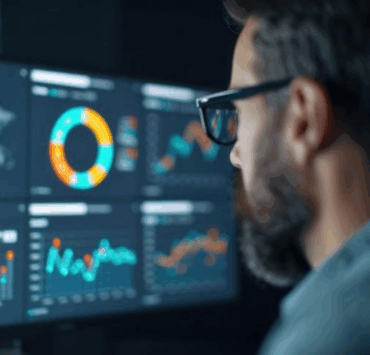


The numbers are staggering: 90% of employees worldwide report that gamification makes them more productive at work, while engagement increases by 100-150% compared to traditional approaches. Additionally, global employee engagement has plummeted to just 21% in 2024, costing the global economy a staggering $8.9 trillion in lost productivity annually. This stark disconnect reveals a critical opportunity.As businesses grapple with unprecedented levels of employee disengagement and burnout, employee productivity monitoring has emerged as both a solution and a challenge. Traditional monitoring creates stress and distrust, as employees see surveillance as a violation of trust. But with gamification, employee productivity monitoring apps shift from surveillance tools to engagement catalysts that boost both performance and satisfaction.
The Crisis of Traditional Employee Productivity Monitoring
The current state of employee monitoring reveals a troubling picture. While the majority of companies use some form of employee monitoring, these systems often backfire spectacularly. Studies show that monitored employees are about 40% less productive when subjected to minute-by-minute tracking compared to those given freedom and outcome-based goals. The psychological toll is equally damaging – monitored employees report increased stress, lower morale, and decreased skill development.
Ironically, tools meant to boost productivity often diminish it. Harvard Business Review found that monitored workers are more likely to take breaks, ignore instructions, and even steal, driven by lost autonomy and psychological reactance. The solution to maintaining visibility without killing engagement: gamification.
The Science Behind Gamification Success
Gamification works because it taps into fundamental human psychological drivers. Research shows that 82% of respondents are aware of gamification in the workplace, with those in gamified environments experiencing significantly higher engagement and productivity levels.
The statistical evidence is compelling:
- Productivity surge: 89% of employees report increased productivity through gamification
- Engagement boost: Gamified workplaces see 60% higher engagement rates
- Happiness factor: 88% of employees report feeling happier when gamification is present
- Training effectiveness:Gamified training programs boost engagement by 60% and reduce completion time by 50%
The mechanism behind these improvements involves four key psychological factors: perceived adoption, recognition, usefulness, and motivation. When employees perceive gamified systems as useful and motivating, their job engagement increases dramatically, which in turn drives productivity improvements.
Transforming Monitoring Through Game Mechanics
The key to gamification in productivity apps is shifting from surveillance to engagement. Instead of tracking keystrokes, gamified systems make work rewarding through:
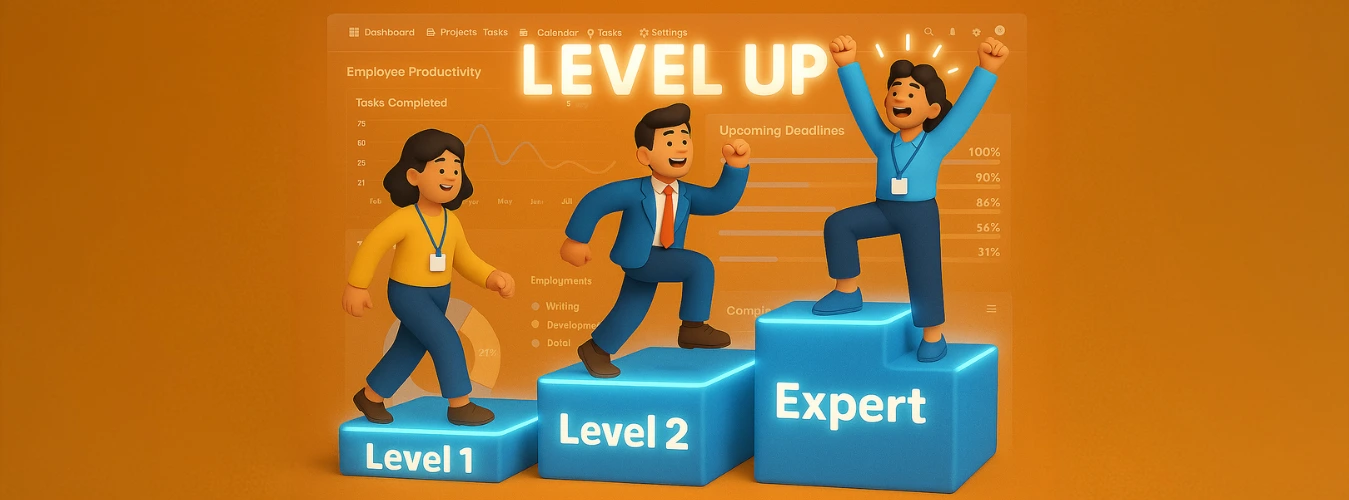
- Achievement Systems: Points, badges, and levels turn routine tasks into accomplishments, recognizing outcomes, collaboration, and skills.
- Real-Time Feedback: Immediate, constructive insights replace punitive after-the-fact data, turning monitoring into coaching.
- Social Recognition: Leaderboards and peer acknowledgment foster healthy competition and support.
- Progress Visualization: Game-like dashboards make productivity metrics tangible, showing contributions to team success.
The Handdy Advantage: Gamification-Ready Monitoring
Employee productivity monitoring apps like Handdy are uniquely positioned to implement gamification because they already capture the data necessary for meaningful game mechanics. The platform’s comprehensive tracking of applications, websites, time allocation, and project progress provides the foundation for sophisticated gamification systems.
Handdy’s existing features – including real-time activity monitoring, project tracking, and detailed analytics – can be enhanced with gamification elements that transform the monitoring experience. Instead of employees feeling watched, they feel supported and motivated to achieve their best performance.
The key is shifting the narrative from “We’re monitoring you” to “We’re helping you succeed.” When employees understand that the system is designed to recognize their achievements and support their growth, monitoring becomes a tool for empowerment rather than control.
Strategic Implementation Framework
Implementing gamification in productivity monitoring requires four phases:
- Foundation Building: Define clear, measurable metrics tied to business goals, capturing both quantity and quality, not just activity.
- Game Design: Build achievement systems with diverse success paths, balancing individual and team challenges.
- Technology Integration: Embed gamification seamlessly into monitoring apps with real-time dashboards that guide performance.
- Cultural Alignment: Align systems with company culture, fostering healthy competition, recognition, and desired behaviors.
Overcoming Implementation Challenges
The path to successful gamification isn’t without obstacles. Organizations must address several key challenges:

- Avoiding Trivialization: Gamification can backfire if it feels childish or disconnected from meaningful work. The game elements must enhance rather than distract from core job responsibilities.
- Preventing Gaming the System: Employees might focus on optimizing their scores rather than actual productivity. Robust metrics and regular system refinements are essential.
- Managing Equity: Not all employees respond equally to gamification. Systems must accommodate different personality types and motivational drivers.
- Maintaining Long-term Engagement: The novelty of gamification can wear off. Continuous evolution and fresh challenges are necessary to sustain motivation.
Building the Future of Work
The convergence of gamification and productivity monitoring is more than a tech trend—it’s a reimagining of the workplace. It tackles the challenge of balancing productivity and accountability with autonomy and well-being. Organizations that thrive will treat monitoring not as surveillance but as empowerment, growth, and shared success. The technology is ready, the psychology proven, and the business case undeniable. The real question: will your organization lead this transformation or fall behind competitors who inspire employees to monitor themselves? Learn how Handdy makes this shift possible: www.handdy.com
Frequently Asked Questions
1. What is gamification in productivity monitoring?
Gamification in productivity monitoring is the application of game mechanics—such as points, badges, leaderboards, and challenges — to employee tracking systems. Instead of traditional surveillance that creates stress, gamification transforms monitoring into an engaging experience that motivates employees while providing managers with valuable performance insights.
2. How does gamification improve employee productivity?
Gamification boosts productivity by tapping into intrinsic motivators like achievement, recognition, and progress. Research shows that 89% of employees report increased productivity through gamification. By providing real-time feedback, visual progress indicators, and meaningful rewards, gamified systems help employees stay focused, motivated, and aligned with organizational goals.
3. Can gamification reduce the negative effects of employee monitoring?
Yes, significantly. Traditional monitoring can decrease productivity by up to 40% due to increased stress and perceived loss of autonomy. Gamification shifts the focus from surveillance to empowerment, making employees feel supported rather than watched. This transforms monitoring from a punitive tool into a motivational system that enhances engagement and performance.
4. What are the key elements of a successful gamified productivity system?
Successful gamification includes: achievement systems (points, badges, levels), real-time constructive feedback, social recognition through leaderboards, progress visualization with intuitive dashboards, diverse success paths that accommodate different work styles, and alignment with meaningful business outcomes rather than just activity tracking.
5. Does gamification work for remote and hybrid teams?
Absolutely. Gamification is particularly effective for remote and hybrid teams, as it provides connection, visibility, and engagement that physical offices naturally offer. Digital leaderboards, virtual badges, and team challenges help remote workers feel connected to colleagues and organizational goals, combating isolation and maintaining accountability without micromanagement.