


In 2026, every manager knows at least one “tab hero” – the person who always has 27 tabs open, five chats blinking, and back‑to‑back meetings from 9 to 7. They look indispensable. But when you ask what actually moved the needle this week, the room goes quiet.That’s the problem in a nutshell: teams that are busy all the time, and leaders who can’t tell whether any of that activity is translating into results. The solution isn’t more pressure or more tools; it’s smarter employee productivity tracking. Here’s how to separate real work from noise.
Redefine Productivity: Output, Not Optics
Most teams still reward the wrong signals: fast replies, full calendars, long hours on Slack. None of those guarantee value. In fact, Great Place to Work’s two‑year study across 800,000 employees found that productivity stayed stable or improved with remote and hybrid work as long as people were clear on outcomes, not presence.
So first, rewrite your definition:
- Busy: A lot of visible motion with unclear impact.
- Productive: Consistently delivering outcomes that matter to customers and the business.
Before you touch any software, decide: what are the 3-5 outputs that prove your team is doing a great job? Revenue? Resolved tickets? Shipped features? Completed campaigns? Build your employee productivity tracking around that list.
Replace “Activity Metrics” With Value Metrics
If you track calls made, emails sent, and hours online, you’ll get… more calls, emails, and hours. You may not get better work.
Better ways to track:
- For sales teams
- Activity metric: number of outbound calls.
- Value metric: number of qualified opportunities created, proposals sent, deals closed.
- For customer support
- Activity metric: tickets touched.
- Value metric: first‑contact resolution, CSAT, time to full resolution.
- For product/engineering
- Activity metric: story points logged, lines of code.
- Value metric: features shipped, bugs fixed in production, performance improvements.
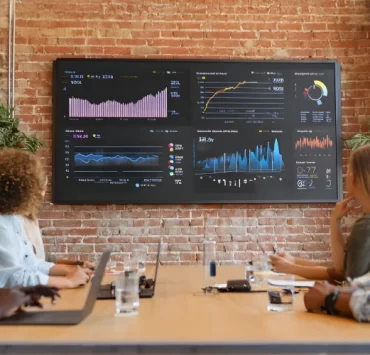
Use tools like Handdy to log and visualise these value metrics weekly. When dashboards show outcomes instead of raw activity, it becomes much harder to hide behind busyness.
Add Context To Your Numbers
Numbers without narrative are dangerous. If “tickets resolved” drops one week, it might mean your team slacked off. It might also mean they were dealing with three monster issues that needed deep work.
Build context into your employee productivity tracking:
- Weekly written check‑ins. Ask each team member to answer three questions in 5–7 sentences:
- What did you ship this week?
- What blocked you?
- What are you focusing on next week?
- Tag work by impact. Encourage people to label tasks as “keep the lights on”, “improvement”, or “strategic”. You’ll quickly see if the team is stuck in low‑impact support work.
- Review work, not just counts. Sample a few tickets, pull requests or campaigns each week to check quality. High numbers with poor quality is just a different kind of busy.
When metrics and short narratives sit side by side, you can tell whether low numbers are a red flag or a reasonable trade‑off.
Make meetings earn their existence
One of the biggest sources of fake productivity is meetings. Research across multiple companies shows that employees in heavy‑meeting cultures often report less time for focused work, despite feeling “very busy”.
To clean this up:
- Track meeting hours per person. If a key contributor spends 30+ hours a week on calls, their real work is happening at night. That’s a burnout trap.
- Audit recurring meetings monthly. For each one, ask: Does this generate decisions, unblock work, or build alignment? If not, shrink it, move it to async, or kill it.
- Measure decisions made. After key meetings, log decisions and owners in your task system. If many meetings produce no clear owner or deadline, that’s a sign of busywork.
Your employee productivity tracking should treat meeting time as a cost that has to justify itself, not as a badge of importance.
Use Monitoring Tech Surgically, Not As A Crutch
With remote and hybrid work, it’s tempting to deploy heavy surveillance: keystroke loggers, random screenshots, webcam‑based “attendance.” Surely, your experience will tell you how often this backfires, increasing stress and lowering trust without improving output.
A saner approach:
- Measure digital load. Track broad patterns: focus vs distraction time, context switches, app overload. Use this to redesign workflows, not punish individuals.
- Make the data transparent. Let employees see the same dashboards you see. If you notice three different tools doing the same job, fix the stack together.
- Combine monitoring with coaching. If someone’s focus time is constantly fragmented, talk about priorities and interruptions rather than “catching” them.
Tech should help people produce better work with less friction. The moment your employee productivity tracking becomes adversarial, you’ve lost.
Watch For The “Always‑on But Under‑delivering” Pattern
Some people are everywhere: responding instantly, joining every call, commenting on every thread. They feel hyper‑productive and yet their critical projects move slowly.
As a manager, look for these signals:
- Projects are constantly at 80% done.
- Great participation, weak ownership.
- Lots of opinions, few shipped artefacts.
When you spot this, don’t assume bad intent. Often, it’s a prioritisation problem or a fear of saying “no.”
Reset by:

- Clarifying one or two top priorities for the next 2–3 weeks.
- Blocking calendar time for deep work on those items.
- Tracking progress only on those priorities, not on “everything you touched.”
You’re retraining that person from “be everywhere” to “finish what matters.”
Build A Culture Where Results Beat Theatrics
In the end, employee productivity tracking is less about dashboards and more about what your culture rewards. If promotions and praise go to the most visible, you’ll get theatrics. If they go to the people who quietly deliver, you’ll get compounding results.
To tilt the culture:
- Celebrate completed projects, not late‑night heroics.
- In reviews, ask “What did you finish?” and “What impact did it have?”
- Share case studies internally where small, focused changes produced outsized outcomes.
Busy feels satisfying at the moment. Productive feels satisfying in the results. As a manager in 2026, your job is to design systems that help your team choose productivity by making it obvious, measurable, and consistently rewarded.
When you combine clear outcomes, thoughtful metrics, and humane employee productivity tracking, you don’t need to hover over your team to know if work is getting done. The results will speak for themselves. For more information on how Handdy can help you achieve this, visit www.handdy.com
Frequently Asked Questions (FAQs)
1. What’s the difference between being productive and being busy?
Being busy means filling time with tasks and activities, while being productive means accomplishing meaningful work that moves toward specific goals. Productive team members complete high-impact work that delivers results, whereas busy team members may be constantly active without generating substantial outcomes. The key distinction lies in output quality and alignment with organizational objectives rather than hours worked or tasks checked off.
2. What are the signs that my team is busy but not productive?
Common signs include constant meetings with no clear outcomes, team members working long hours but missing deadlines, lots of activity with minimal progress on key projects, firefighting and reactive work dominating the schedule, and difficulty articulating what was accomplished at the end of the day. If your team seems exhausted but key performance indicators aren’t improving, they’re likely caught in a busyness trap rather than achieving true productivity.
3. How can I measure my team’s actual productivity?
Focus on outcome-based metrics rather than activity metrics. Track completion of strategic goals, quality of deliverables, customer satisfaction scores, revenue generated, or projects completed on time and within budget. Use key performance indicators specific to your industry and role functions. Regular check-ins focused on progress toward objectives, rather than hours logged, provide better insight into true productivity levels.
4. What causes teams to fall into the busyness trap?
Teams become busy without being productive due to unclear priorities, lack of strategic planning, poor delegation, excessive meetings, constant interruptions, inefficient processes, focusing on urgent rather than important tasks, and workplace cultures that reward visibility over results. Fear of saying no, perfectionism, and inadequate tools or resources also contribute to unproductive busyness.
5. How can I help my team become more productive and less busy?
Start by clarifying priorities and ensuring everyone understands strategic goals. Eliminate unnecessary meetings and streamline processes. Encourage deep work by creating interruption-free time blocks. Implement project management tools for better visibility. Set clear expectations around outcomes rather than hours worked. Regular one-on-ones can help identify blockers and realign efforts. Foster a culture where it’s acceptable to decline low-value tasks and focus on high-impact work.