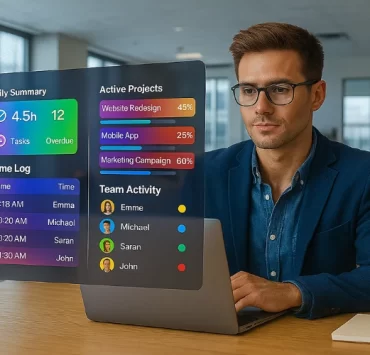



Imagine discovering that a common productivity tool has been quietly sabotaging employee morale. The solution isn’t to remove it, but to flip the script. When implemented thoughtfully, time tracking software transforms from a monitoring mechanism into an empowerment platform that benefits both employees and organizations.Recent data reveals that only 32% of employees feel engaged at work, costing the global economy $8.8 trillion annually in lost productivity. However, companies using transparent time tracking systems report significant improvements in employee satisfaction, work-life balance, and productivity levels. The secret lies in empowerment through visibility and accountability.
Transparency That Builds Trust, Not Fear
Modern time tracking software creates unprecedented workplace transparency that strengthens employee relationships. When employees see how their time is distributed, they gain self-awareness about their work patterns. This transparency works both ways. Managers receive insights into workload distribution, enabling them to identify overburdened team members before burnout occurs. The software helps prevent problems by flagging excessive overtime and encouraging regular breaks, fostering a culture where data-driven conversations replace guesswork.
For bookkeeping outsourcing services and accounting firms, this transparency is particularly valuable. Providers can demonstrate exactly how time is allocated across clients, building trust and justifying billing practices with clear documentation.
Enhanced Work-Life Balance Through Intelligent Monitoring
Contrary to popular belief, time tracking software often improves work-life balance. Advanced platforms include features like overtime alerts and break reminders that actively promote healthy work habits. Employees can see when they’ve been working excessive hours and adjust their schedules proactively.
The software helps identify time-wasting activities that keep employees at their desks longer than necessary. By revealing time spent on non-productive tasks, workers can eliminate inefficiencies. Studies show that employees using time tracking software report better focus and reduced stress because they gain control over their daily schedules. For remote workers, it provides a crucial framework for maintaining professional boundaries.
Productivity Insights That Drive Personal Growth
Time tracking software such as Handdy serve as a personal productivity coach, offering insights employees cannot obtain through self-observation alone. It identifies peak performance periods, showing when individuals accomplish their best work. Armed with this information, employees can schedule demanding tasks during high-energy periods and reserve routine activities for natural productivity dips.
This self-knowledge enables better task scheduling and improved performance. Accounting professionals using time tracking software report significant improvements in task prioritization and deadline management. For businesses offering bookkeeping outsourcing services, these insights help optimize service delivery by identifying which accounting tasks require the most time, allowing for more accurate project estimates.
Fair Recognition and Compensation
One of the most empowering aspects of time tracking software is its ability to ensure fair recognition for employee contributions. The software creates an objective record of effort invested in projects, eliminating disputes about workload distribution. Employees no longer worry about their contributions going unnoticed because every hour is documented.
This objective tracking proves invaluable for performance reviews. Instead of relying on subjective impressions, managers can reference concrete data about productivity patterns. High-performing employees receive recognition backed by measurable evidence. For bookkeeping outsourcing services, detailed time logs showing exactly how hours were invested in client work lead to fewer billing disputes and stronger client relationships.
Professional Development Through Data-Driven Feedback
Time tracking software transforms performance management from an annual event into an ongoing development process. The continuous data collection enables regular check-ins where managers and employees review productivity trends and set realistic goals based on historical performance.

The software helps employees identify skills gaps by revealing which tasks consistently take longer than expected. This information guides targeted training decisions rather than generic development programs. For accounting firms utilizing outsourced bookkeeping services, this data-driven approach improves service quality over time by tracking which team members excel at specific financial tasks.
Building Accountability Without Micromanagement
The most sophisticated time tracking software promotes accountability while reducing the need for intrusive oversight. Employees take ownership of their productivity because they can see their own performance data in real-time. This self-monitoring approach proves more effective than external supervision because it empowers rather than constrains.
The software creates natural feedback loops where employees can adjust their behavior based on productivity insights. This enables managers to focus on coaching and strategic support rather than monitoring daily activities, replacing surveillance with opportunities for growth.
When implemented with a focus on empowerment, time tracking software becomes more than a simple monitoring tool; it becomes a platform for building trust, enhancing work-life balance, and driving professional growth for everyone involved. If you are looking for time tracking software that provides all these benefits, look no further, visit www.handdy.com
Frequently Asked Questions
- How does time tracking software empower employees rather than micromanage them?
Time tracking software empowers employees by providing transparency and data-driven insights into their work patterns. Instead of micromanagement, it gives workers autonomy to analyze their productivity, identify time-wasting activities, and make informed decisions about managing their workload. Modern time tracking tools focus on self-improvement rather than surveillance, helping employees take ownership of their time management. - What are the unexpected benefits of using time tracking software for employee morale?
Beyond productivity metrics, time tracking software can significantly boost morale by providing concrete evidence of accomplishments, facilitating fair workload distribution, and supporting accurate project estimates. Employees feel valued when their actual work hours are documented, especially for billing and recognition purposes. This transparency also helps prevent burnout by revealing overwork patterns early. - Can time tracking software improve work-life balance for employees?
Yes, time tracking software helps employees maintain better work-life balance by making them aware of overtime patterns and helping them set boundaries. It provides visibility into after-hours work, encourages employees to take breaks, and helps managers identify team members at risk of burnout. Many employees report feeling more in control of their schedules when they can see exactly where their time goes. - How does time tracking help with employee career development?
Time tracking creates a detailed record of skills used, projects completed, and time invested in professional development. This data becomes valuable during performance reviews, helping employees demonstrate their contributions with concrete metrics. It also helps identify areas where employees spend most of their time, revealing strengths and opportunities for skill development or role adjustments. - Does time tracking software really increase productivity, or does it just measure it?
Time tracking software both measures and increases productivity. The awareness created by tracking naturally encourages better time management through a phenomenon called the “Hawthorne effect.” Employees become more intentional about their tasks, reduce time spent on distractions, and better prioritize high-value activities. The data also helps identify process inefficiencies that can be improved.